
Every January the same ritual appears: new notebooks, new goals and a closet that somehow still feels wrong. A wardrobe reset is the calm, practical answer. Instead of buying a fresh start, you take a weekend to look honestly at what you own, send the unworn pieces on to a second life and write a short list of what is genuinely missing.
This guide is not about owning less for the sake of it, and it is not a capsule collection tutorial. It is a five-step plan for a New Year wardrobe reset that covers sorting, donating, reselling and shopping smarter, so that by the end of January your closet works for the life you actually lead.
Why a Wardrobe Reset Works Better in January
The turn of the year is a natural checkpoint. Winter coats are in daily use, so you know which ones earn their space. Holiday outfits have just been worn, which shows what you reach for under pressure. And the energy of a new beginning makes a wardrobe reset feel lighter than a chore usually does.
There is also a bigger picture. Clothing that sits unworn is wasted money, wasted materials and wasted space. Research shared by the Ellen MacArthur Foundation shows how quickly garments are discarded after only a few wears, which is why keeping clothes in use for longer is one of the simplest habits you can adopt.
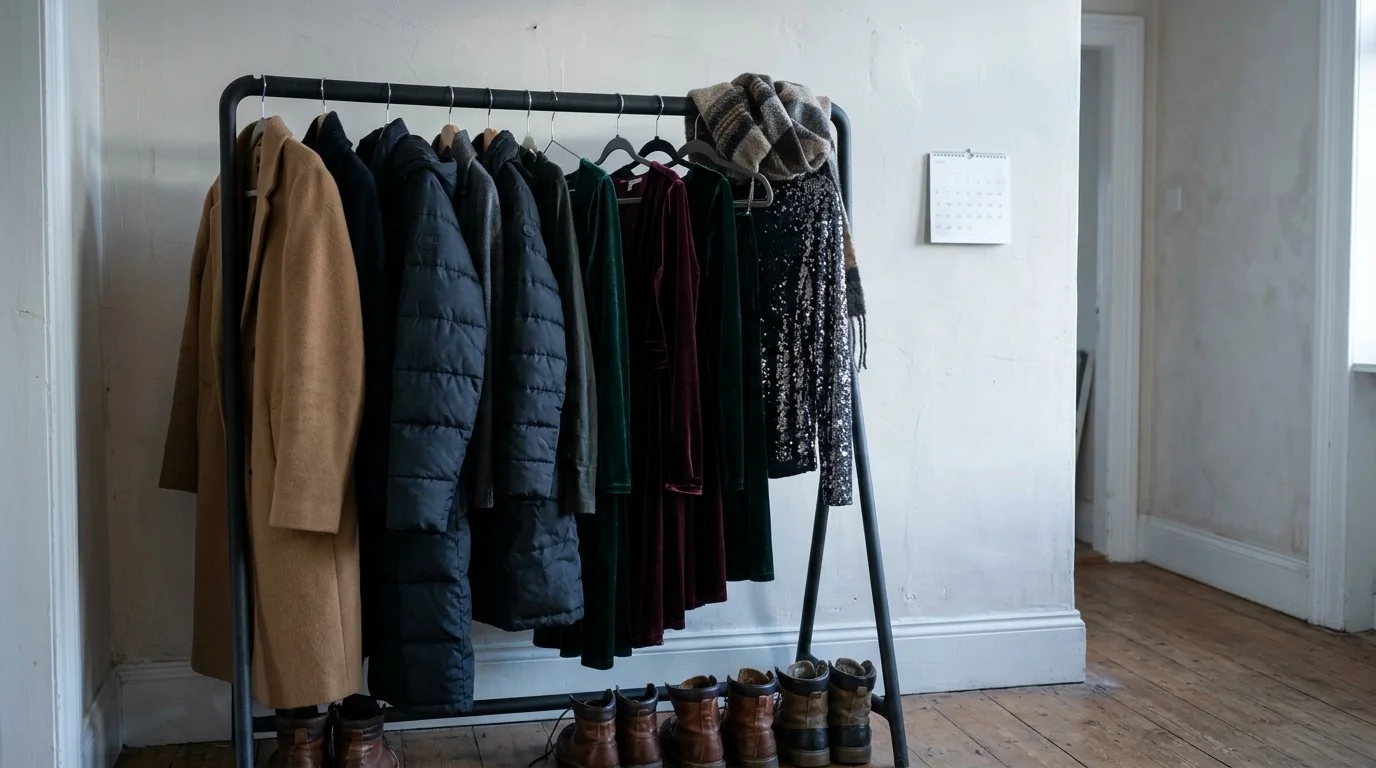
Step 1: Take Stock Before You Touch Anything
The biggest mistake in any closet clean out is throwing things away at once. Begin with observation instead.
- Look back at the year: scroll through your photos and note what you wore to work, to weddings, on holiday and at home.
- Write down your real week: how many days are office, casual, active or formal? Your closet should mirror that mix.
- Find your favourites: pull out the five pieces you wore most. What do they have in common: colour, fabric, fit?
These notes become your filter. A wardrobe reset built on how you really live is far more successful than one built on an imaginary version of yourself.
Step 2: Sort Everything Into Four Piles
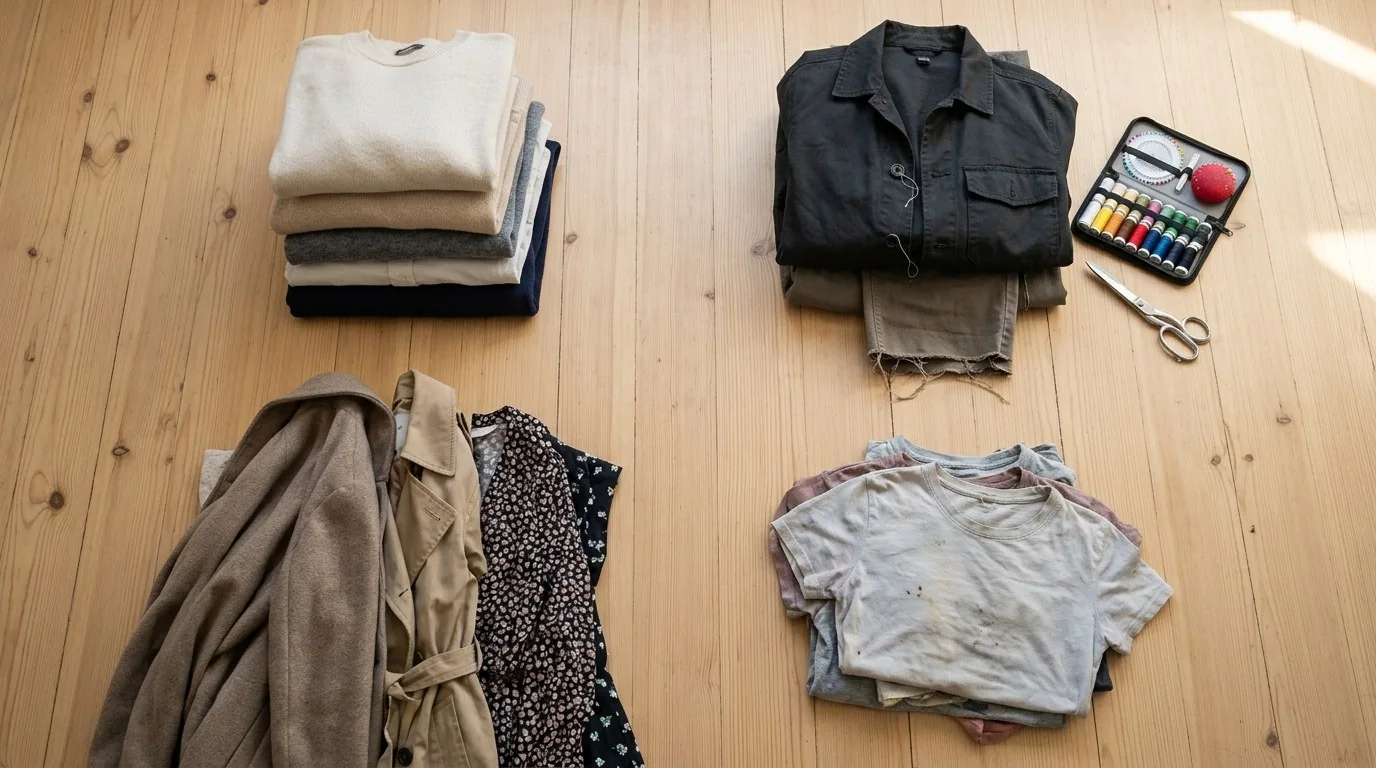
Empty each section of the closet onto the bed and sort as you go. Use four simple piles:
- Keep: worn in the last year, fits now and makes you feel good.
- Repair or alter: a missing button, a hem, a zipper or a tailoring tweak could bring it back.
- Resell or donate: in good condition but no longer you.
- Recycle: stained, worn out or damaged beyond repair.
Questions That Make Decisions Easier
- Would I buy this again today at full price?
- Do I have at least three outfits it works in?
- Am I keeping it out of guilt, or because I love it?
Be kind to yourself. A beautiful dress you never wore is not a failure; it is useful information for future shopping. Keep a small box for sentimental items so they do not clutter the daily closet.
Step 3: Donate With Care
Donating is the most generous exit for clothes in good condition, but it works best when done thoughtfully. Charity shops cannot sell everything they receive, so quality matters.
- Donate clean, wearable items: washed, folded and free of damage.
- Choose the right place: local charities, shelters, school drives and community clothing banks often need coats, work wear and children’s items more than party outfits.
- Ask first: many organisations publish a list of what they need this season.
- Keep the receipt: where donations are tax deductible, a simple record helps.
Worn-out textiles should go to a textile recycling point rather than the household bin. A well-run wardrobe reset keeps as many garments as possible in circulation and sends only the truly finished ones to recycling.

Step 4: Resell the Pieces That Still Have Value
The money side of a wardrobe reset is a bonus. Good-quality jackets, leather bags, designer basics and recent-season pieces can bring back a meaningful amount of money. Resale also fits the growing interest in circular fashion; our guide to sustainable fashion trends and philosophy explores why extending a garment’s life matters.
Where to Sell
- Online resale platforms: best for branded and recent items with clear photos.
- Local selling groups and swaps: ideal for bulky items you would rather not ship.
- Consignment boutiques: they handle the work in return for a share of the sale.
How to Sell Faster
- Photograph each piece in natural daylight on a hanger or flat surface.
- Describe size, fabric, condition and any flaws honestly.
- Price slightly under what you hope for and be ready to bundle items.
- List winter pieces right now; demand for coats peaks in January.
Set a deadline of two or three weeks. Anything unsold goes to donation, so the wardrobe reset never drags on.

Step 5: Build Your Missing-Pieces List
Now comes the part that makes a wardrobe reset last: it prevents impulse buying. With the closet clear, look at what remains and ask what stops you from getting dressed easily. Write a short, specific list, not a vague wish.
How to Spot Gaps
- Try five outfits: assemble looks for your usual week and note where you get stuck.
- Check each category: do you have enough layers, shoes for rain, a smart option for events and something comfortable for home?
- Look for orphans: pieces that match nothing else show exactly what is missing around them.
A Sample Missing-Pieces List
- One well-fitted pair of dark trousers
- A neutral knit that goes with three existing bottoms
- Waterproof ankle boots
- A lightweight coat for spring
Keep the list in your phone and consult it before every purchase. If an item is not on the list, wait a week. Our look at local fashion brands can also help you find well-made pieces to fill gaps without defaulting to fast fashion.

Keeping the Reset Alive All Year
A wardrobe reset only matters if the order lasts. A few light habits protect your work:
- One in, one out: when something new arrives, something old leaves.
- Mini check-ins each season: fifteen minutes at the change of season is enough.
- Turn hangers backwards: flip them after wearing; in six months you will see what was never touched.
- Store with intention: visible, folded and hung items get worn; hidden ones do not.
Common Mistakes to Avoid
- Donating in a rush and regretting it: use the repair and sentimental piles for doubtful items.
- Shopping straight away: wait at least two weeks before buying replacements.
- Chasing a perfect closet: the goal of a wardrobe reset is ease, not an empty rail.
- Ignoring fit: if it only works after a diet, it is not working.

Frequently Asked Questions
How long does a wardrobe reset take?
Plan one full weekend for sorting and about two weeks for reselling and donating. You can split it into one section per evening if a whole day feels too much.
How many clothes should I keep?
There is no magic number for a wardrobe reset. Keep what you wear, love and can style in several ways, and let the size of your closet follow your lifestyle.
Should I resell or donate?
Resell pieces with real market value, such as branded or nearly new items, and donate the rest. Anything unsold after a set period can move to donation.
When should I start shopping again?
After the reset is complete and your missing-pieces list is written. A short waiting period makes your next purchases far more intentional.
Final Thoughts
A New Year wardrobe reset is less about discipline and more about clarity. Sort honestly, donate with care, resell what still has value and shop only from a list. You finish with a lighter closet, a little extra money and mornings that feel easier from the very first week of the year.
Are you a lifestyle or fashion brand with a story to share? Contact ModadaModa to feature your brand in a sponsored story.